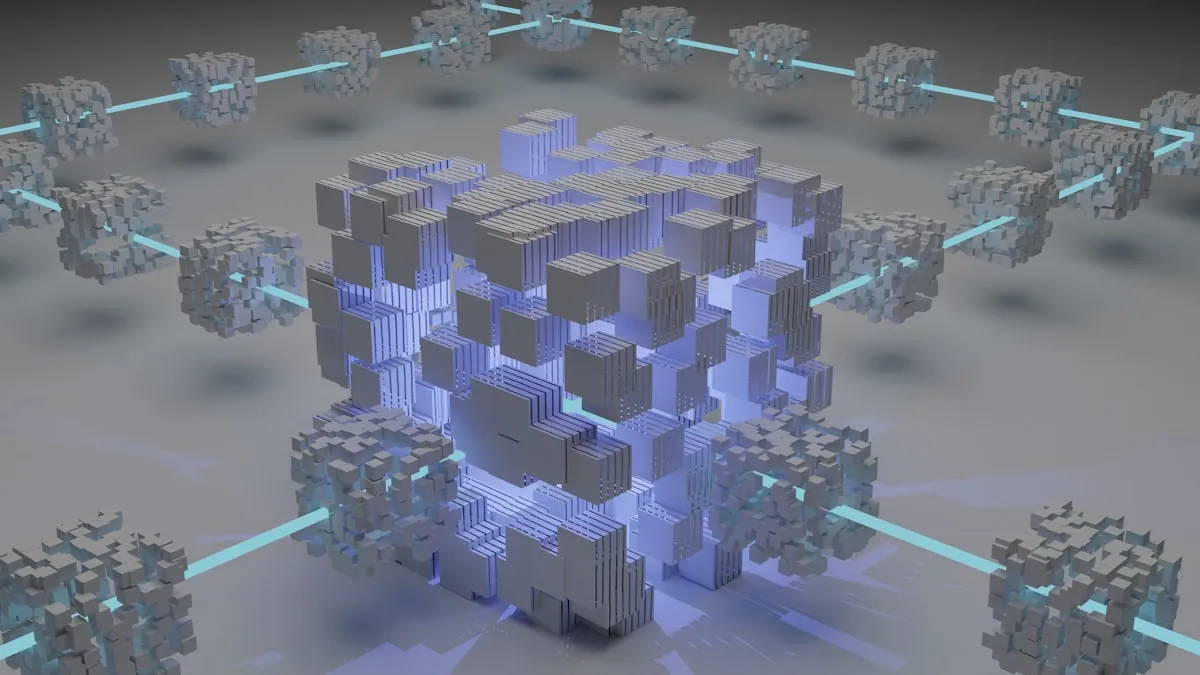
Blockchain and Web3 — The Decentralized Future
Introduction: The Decentralized Revolution
Blockchain technology represents one of the most significant technological innovations of our time. It enables decentralized systems, removes the need for trusted intermediaries, and creates new possibilities for digital ownership and transactions. This comprehensive guide covers blockchain fundamentals, Web3 development, and the rapidly evolving ecosystem.
Table of Contents
- Introduction
- What is Blockchain?
- How Blockchain Works
- Popular Blockchains
- Smart Contracts
- Web3 Development Tools
- Decentralized Applications (dApps)
- DeFi - Decentralized Finance
- NFTs and Digital Assets
- Security and Risks
- Future of Web3
- Resources
What is Blockchain?
Blockchain is a distributed ledger technology that maintains a continuously growing list of records called blocks. Each block contains cryptographic hashes, timestamps, and transaction data, making it immutable and transparent.
Key Characteristics
- Decentralized: No single point of failure or control
- Immutable: Once data is recorded, it’s extremely difficult to change
- Transparent: All participants can view the ledger
- Secure: Cryptographic protection ensures data integrity
- Permanent: Historical records are permanent
Blockchain vs Traditional Databases
| Aspect | Blockchain | Traditional Database |
|---|---|---|
| Control | Decentralized | Centralized |
| Transparency | Full transparency | Limited |
| Immutability | Data is permanent | Data can be modified |
| Security | Cryptographic | Authentication-based |
| Consensus | Distributed consensus | Single authority |
| Transaction Speed | Slower | Very fast |
How Blockchain Works
Block Structure
Each block contains:
- Block Header: Metadata and previous block hash
- Transactions: Data specific to each block
- Timestamp: When the block was created
- Nonce: A number used in Proof of Work
- Hash: Unique identifier for the block
Block 1
├─ Header
├─ Transactions
├─ Timestamp
├─ Nonce
└─ Hash: ABC123...
   ↓
Block 2
├─ Header
├─ Transactions (includes Hash of Block 1)
├─ Timestamp
├─ Nonce
└─ Hash: DEF456...
Consensus Mechanisms
Blockchains use consensus mechanisms to validate and add new blocks.
Proof of Work (PoW)
- Miners solve complex mathematical puzzles
- First to solve gets to add the block
- Requires significant computational power
- Used by: Bitcoin, Ethereum (pre-merge)
Proof of Stake (PoS)
- Validators are chosen based on their stake
- Less energy-intensive than PoW
- Validators risk their stake if they act maliciously
- Used by: Ethereum (post-merge), Cardano
Other Mechanisms
- Delegated Proof of Stake (DPoS)
- Proof of Authority (PoA)
- Proof of History (PoH)
Popular Blockchains
Ethereum
The leading smart contract platform enabling decentralized applications.
Characteristics:
- Pioneered smart contracts
- Large developer community
- Extensive DeFi ecosystem
- High transaction costs (gas fees)
- Recently switched to Proof of Stake
Token: ETH
Bitcoin
The original blockchain and largest cryptocurrency by market cap.
Characteristics:
- First cryptocurrency implementation
- Focused on peer-to-peer payments
- Immutable ledger
- Fixed supply (21 million BTC)
- Energy-intensive Proof of Work
Token: BTC
Solana
High-performance blockchain focused on speed and scalability.
Characteristics:
- Fast transactions (up to 65,000 TPS theoretical)
- Low transaction costs
- Proof of History consensus
- Growing DeFi ecosystem
- NFT-friendly
Token: SOL
Polygon
Layer 2 scaling solution for Ethereum.
Characteristics:
- Much cheaper transactions than Ethereum
- EVM-compatible
- Good for scalability
- Large DApp ecosystem
Token: MATIC
Smart Contracts
Smart contracts are self-executing programs that run on blockchains, automating transactions without intermediaries.
Smart Contract Example (Solidity)
pragma solidity ^0.8.0;

contract Token {
  mapping(address => uint256) public balances;
  string public name = "MyToken";
  uint256 public totalSupply = 1000000;

  constructor() {
    balances[msg.sender] = totalSupply;
  }

  function transfer(address recipient, uint256 amount) public returns (bool) {
    require(balances[msg.sender] >= amount, "Insufficient balance");
    require(recipient != address(0), "Invalid recipient");

    balances[msg.sender] -= amount;
    balances[recipient] += amount;

    return true;
  }

  function getBalance(address account) public view returns (uint256) {
    return balances[account];
  }
}
Smart Contract Best Practices
- Security Audits: Have contracts reviewed by experts
- Formal Verification: Mathematically prove contract correctness
- Testing: Comprehensive test coverage
- Time Locks: Delays on critical operations
- Multi-Signature Wallets: Require multiple signatures for important actions
Web3 Development Tools
Web3.js
JavaScript library for interacting with Ethereum.
const Web3 = require('web3');
const web3 = new Web3('http://localhost:8545');

// Get accounts
const accounts = await web3.eth.getAccounts();
console.log(accounts);

// Get balance
const balance = await web3.eth.getBalance(accounts[0]);
console.log(web3.utils.fromWei(balance, 'ether'));

// Send transaction
const tx = await web3.eth.sendTransaction({
  from: accounts[0],
  to: '0x...',
  value: web3.utils.toWei('1', 'ether')
});
Ethers.js
Modern, lightweight alternative to Web3.js.
const { ethers } = require("ethers");

// Connect to provider
const provider = new ethers.providers.JsonRpcProvider('http://localhost:8545');

// Get signer
const signer = provider.getSigner();

// Get balance
const balance = await provider.getBalance(address);
console.log(ethers.utils.formatEther(balance));

// Send transaction
const tx = await signer.sendTransaction({
  to: '0x...',
  value: ethers.utils.parseEther("1.0")
});
await tx.wait();
Development Frameworks
- Hardhat: Ethereum development environment
- Truffle: Complete development framework
- Foundry: Rust-based smart contract development
- Remix: Online IDE for Solidity
Decentralized Applications (dApps)
dApp Architecture
Frontend (React/Vue/Svelte)
    ↓
Web3 Library (Web3.js/ethers.js)
    ↓
Blockchain Node (Ethereum/Solana/etc)
    ↓
Smart Contracts
Building a Simple dApp
// Connect wallet
async function connectWallet() {
  if (typeof window.ethereum !== 'undefined') {
    try {
      const accounts = await window.ethereum.request({
        method: 'eth_requestAccounts'
      });
      console.log('Connected:', accounts[0]);
    } catch (error) {
      console.error('Connection failed:', error);
    }
  }
}

// Interact with contract
async function interact() {
  const provider = new ethers.providers.Web3Provider(window.ethereum);
  const signer = provider.getSigner();

  const contract = new ethers.Contract(
    contractAddress,
    contractABI,
    signer
  );

  // Call contract function
  const result = await contract.getBalance();
  console.log('Balance:', ethers.utils.formatEther(result));
}
DeFi - Decentralized Finance
DeFi applications recreate traditional financial services on blockchains without intermediaries.
Key DeFi Concepts
Liquidity Pools
- Users deposit tokens in exchange for yield
- Automated Market Makers (AMMs) facilitate trading
- Returns based on trading fees and incentives
Staking
- Lock tokens to earn rewards
- Participate in protocol governance
- Earn yield on holdings
Lending/Borrowing
- Deposit assets as collateral
- Borrow other assets
- Pay interest rates based on supply/demand
Yield Farming
- Provide liquidity or stake to earn rewards
- Often includes governance tokens
- Higher risk, higher potential returns
Popular DeFi Protocols
- Uniswap: Decentralized exchange (DEX)
- Aave: Lending protocol
- MakerDAO: Stablecoin protocol
- Curve: Stablecoin exchange
- Yearn Finance: Yield optimization
NFTs and Digital Assets
NFTs (Non-Fungible Tokens) represent unique digital or physical assets on blockchains.
ERC-721 Standard (NFTs)
pragma solidity ^0.8.0;

interface IERC721 {
  function transfer(address recipient, uint256 tokenId) external;
  function ownerOf(uint256 tokenId) external view returns (address);
  function approve(address to, uint256 tokenId) external;
}
NFT Use Cases
- Digital Art: Unique digital artworks
- Collectibles: Trading cards, virtual items
- Gaming: In-game assets and characters
- Real-World Assets: Property deeds, certificates
- Membership: Access tokens for communities
- Domain Names: ENS (Ethereum Name Service)
NFT Marketplaces
- OpenSea: Largest NFT marketplace
- Foundation: Digital art focused
- Magic Eden: Solana NFT platform
- Rarible: Creator-focused platform
Security and Risks
Common Vulnerabilities
Reentrancy
- Attacker calls contract recursively before state updates
- Can drain funds if not protected
Integer Overflow/Underflow
- Math operations exceed data type limits
- Can cause unexpected behavior
Front Running
- Attackers see pending transactions and insert their own first
- Particularly problematic for DEX trades
Security Practices
✓ Use established libraries (OpenZeppelin) ✓ Get contracts professionally audited ✓ Implement rate limiting ✓ Use multi-signature wallets ✓ Never expose private keys ✓ Test thoroughly before mainnet deployment ✓ Monitor for suspicious activity ✓ Use hardware wallets for large holdings
Future of Web3
Emerging Trends
- Layer 2 Solutions: Scaling Ethereum and other L1s
- Cross-Chain Bridges: Connecting different blockchains
- Account Abstraction: Improving user experience
- Zero Knowledge Proofs: Privacy and scalability
- Interoperability: Different chains communicating
- Central Bank Digital Currencies (CBDCs): Government blockchains
Resources
- Ethereum Official: https://ethereum.org
- Solidity Documentation: https://docs.soliditylang.org
- OpenZeppelin: Smart contract library
- CryptoZombies: Interactive learning
- EthHub: Ethereum knowledge base
- Coinbase Learn: Blockchain education
- Mirror: Web3 writing platform
Web3 is the new frontier of technology and digital ownership!
What is Blockchain?
Blockchain is a distributed ledger that is immutable, transparent, and cryptographically secure.
Block 1 -> Block 2 -> Block 3 -> ...
Hash     Hash       Hash
Smart Contracts
pragma solidity ^0.8.0;

contract SimpleStorage {
  uint storedData;

  function set(uint x) public {
    storedData = x;
  }

  function get() public view returns (uint) {
    return storedData;
  }
}
Popular Blockchains
- Ethereum: Smart contracts and applications
- Bitcoin: Digital currency and store of value
- Polygon: Layer 2 scaling solution
- Solana: High-performance blockchain
Web3 Technologies
Web3.js
const Web3 = require('web3');
const web3 = new Web3('http://localhost:8545');

const accounts = await web3.eth.getAccounts();
ethers.js
const { ethers } = require("ethers");

const provider = new ethers.providers.JsonRpcProvider(...);
const signer = provider.getSigner();
DeFi Concepts
- Decentralized Exchanges (DEX)
- Liquidity Pools for trading
- Staking for rewards
- Yield Farming strategies
NFTs (Non-Fungible Tokens)
// ERC-721 Standard (NFTs)
contract MyNFT {
  function mint(address to, string uri) public;
  function transferFrom(from, to, tokenId) public;
}
Challenges
⚠️ High gas fees for transactions ⚠️ Scalability limitations ⚠️ Environmental impact concerns ⚠️ Regulatory uncertainty
Web3 is the new frontier of technology!