Code Review Feedback: Improve Code Without Killing Trust
Table of Contents
- Introduction
- Code Review Is More Than Finding Mistakes
- Why the Way You Give Feedback Matters
- Principles of Constructive Code Review Feedback
- A Format for Actionable Comments
- Comment Examples: Before and After
- Distinguishing Blockers, Suggestions, and Nitpicks
- How to Receive Feedback Without Becoming Defensive
- Team Habits That Make Reviews Healthier
- Code Review Checklist for Reviewers and Authors
- FAQ
- Conclusion
Introduction
Code review is often treated as the final gate before code is merged. Reviewers look for bugs, check consistency, and leave comments for the author to address. One important detail is easy to miss, however: every comment also shapes how team members work together.
A comment such as “this is wrong” may identify a problem, but it does not necessarily help the author understand the reason or find a better solution. Feedback that is too gentle but vague creates a different problem: nobody knows what action is expected.
Healthy code review requires two things at once: strong technical standards and communication that respects the person behind the code. This article explains how to balance both so review becomes a process for building better software and a better team—not a search for someone to blame.
Code Review Is More Than Finding Mistakes
Finding defects before production is an important goal of code review, but its value goes much further. A good review helps a team:
- distribute domain and codebase knowledge
- keep architectural decisions consistent
- uncover assumptions that were never documented
- grow engineers through real technical discussion
- reduce dependence on a single person
- develop shared quality standards
The reviewer is not the “code police,” and the author is not taking an exam. Both are collaborating on the same problem. The code is being reviewed; the author’s ability or worth is not.
This shift in perspective changes the language people use. “Why did you do it this way?” can feel like an interrogation. “What considerations led to this approach?” creates room for context the reviewer may not yet have.
Why the Way You Give Feedback Matters
Technical feedback is never received in a vacuum. The author may have spent days on the change, may be working against a deadline, or may be unfamiliar with that part of the codebase. An ambiguous or dismissive comment can quickly turn a technical discussion into personal tension.
Good delivery creates several practical benefits:
1. Problems are resolved faster
A comment that identifies the risk, the location, and a possible direction reduces back-and-forth. The author does not need to guess what the reviewer meant.
2. Psychological safety is preserved
People who feel safe are more willing to admit uncertainty, ask questions, and propose ideas. That matters because serious bugs often emerge from assumptions nobody felt comfortable challenging.
3. Knowledge lasts longer
An instruction tells someone what to change. An explanation of the reason helps them make a better decision in the next change too.
4. Review is not controlled by seniority
When comments are evaluated by evidence and impact, a junior engineer can identify an important issue in a senior engineer’s code. The quality of the discussion does not depend on job titles.
Principles of Constructive Code Review Feedback
1. Critique the code, not the person
Avoid language that connects a problem to the author’s competence.
- Less helpful: “You do not understand this component’s lifecycle.”
- Better: “This subscription is not cleaned up when the component unmounts, so listeners may accumulate each time the page opens.”
The second version focuses on observable code behavior and a risk that can be fixed.
2. Explain the reason, not only the preference
“Change this” does not share context. Add the reason: perhaps there is a race condition, an API consistency concern, an accessibility problem, or a maintenance cost.
If the reason is only personal taste, consider whether the comment is needed at all. Repeated preferences belong in a formatter, linter, or team guideline.
3. Make comments specific and actionable
“This code is confusing” is too broad. Point to what makes it difficult and suggest an action that might help:
This condition handles three states at once, which makes the error path hard to follow. Could we move the
expiredvalidation into a guard clause before the main flow?
The author now knows the concern, its impact, and one possible next step.
4. Separate facts, questions, and preferences
Do not disguise an order as a question. If a change is required because of a bug, state that clearly. If you do not understand something, ask without assuming the implementation is wrong.
- Fact: “This endpoint returns user data without a tenant check.”
- Question: “Does the route-level middleware already guarantee the tenant check?”
- Preference: “I tend to use an early return here because it makes the flow easier to scan, but this is non-blocking.”
5. Recognize what works well
A review does not need to contain only problems. Specific positive feedback reinforces patterns worth repeating:
Separating the parser from the validator makes the error cases much easier to test. This would be a useful pattern for the other endpoints too.
Generic praise is friendly. Specific praise also documents the practices the team values.
6. Offer options without taking over
A reviewer should provide direction without rewriting the author’s entire solution. For non-critical issues, offer one or two alternatives and their trade-offs, then leave room for the author to decide.
A Format for Actionable Comments
A simple format makes review comments easier to understand:
Observation → Impact → Suggestion or question
For example:
This query runs inside the loop for every order. On accounts with many orders, the query count will grow linearly and slow the endpoint. Could we fetch the relation once with eager loading?
Those three pieces answer the author’s main questions:
- Which part are we discussing?
- Why is it a problem?
- What could happen next?
Not every comment needs to be long. A short comment is enough when the problem is clear and the team already has a standard:
Blocking: This token is written to the log. Please redact it before merge because our external observability system can access these logs.
A label at the beginning also communicates urgency without forcing the author to interpret tone.
Comment Examples: Before and After
Example 1: Judgmental feedback
Before:
This is bad design. Just use a service.
After:
This handler now owns validation, database access, and email delivery. Moving the business flow into a service would make email failures easier to test and retry. Could we separate that logic before this PR is merged?
Example 2: Vague feedback
Before:
Please fix this.
After:
Blocking: When
itemsis empty, thisreduce()call has no initial value and will throw. Please provide an initial value of0or handle the empty state first.
Example 3: Treating preference as a rule
Before:
Rename this. I do not like abbreviations.
After:
Nit: What do you think about renaming
cfgtopaymentConfig? The explicit name may help because this function uses several other configs. Non-blocking.
Example 4: A question that sounds accusatory
Before:
Why didn’t you use a cache?
After:
Does this data need to be real-time? If one minute of staleness is acceptable, a short cache may reduce load on the upstream API.
The difference is not merely politeness. Each “after” version contains more technical information and moves the discussion forward.
Distinguishing Blockers, Suggestions, and Nitpicks
One of the biggest sources of review frustration is uncertainty about which comments must be resolved before merge. Use labels the team agrees on.
Blocking
This must be addressed before merge because it involves correctness, security, data loss, a product requirement, or a meaningful operational risk.
Blocking: The balance update and ledger entry are not in the same transaction. If the second operation fails, the balance and ledger can diverge.
Suggestion
This is a valuable improvement, but it is open for discussion or can be scheduled separately.
Suggestion: This response mapping appears in three controllers. We could extract a serializer to keep the format consistent, either in this PR or as a follow-up.
Nitpick
This is a small readability or style improvement that should not prevent a merge.
Nit:
resultcould be more specific aseligibleInvoices. Non-blocking.
Teams can also use prefixes such as question:, praise:, or todo:. The system does not need to be complex; it only needs a shared meaning.
How to Receive Feedback Without Becoming Defensive
Review culture is not only the reviewer’s responsibility. Authors also need to treat comments as input about the change, not a verdict on themselves.
Helpful habits include:
- pause before replying to a comment that feels sharp
- ask for clarification when the impact or expectation is unclear
- explain context and trade-offs instead of merely defending the solution
- acknowledge the issue briefly when the reviewer is right
- move a long discussion to a short call, then record the conclusion in the PR
- do not resolve a thread before both sides agree the concern is addressed
A response such as “good catch, I added a guard for the empty state” is enough. Not every comment requires a long defense.
Authors can disagree too. A healthy response might look like this:
I agree that the duplication is worth watching. For this PR I would keep it because the two flows will change independently next month. I added a comment explaining that decision. Does that address your concern?
The goal is not to agree with every reviewer. It is to ensure the final decision is deliberate.
Team Habits That Make Reviews Healthier
Good feedback struggles to survive inside a poor process. Teams need conditions that support high-quality review.
Keep pull requests small
Small PRs give reviewers enough space to understand a change and write thoughtful feedback. A thousand-line PR encourages rushed review or shallow comments.
Provide context up front
A PR description should explain the goal, key decisions, testing instructions, relevant screenshots, and areas where focused review would help. Reviewers should not need to infer intent from the diff.
Automate mechanical debates
Formatting, import ordering, and basic style rules should be handled by tools. Human time is better spent on correctness, design, security, and maintainability.
Set realistic response expectations
An expectation such as “first review within one working day” prevents forgotten PRs without forcing reviewers to abandon focused work whenever a notification appears.
Change the medium when text is not enough
After several comment rounds without progress, have a 10–15 minute conversation. Record the decision and reasoning in the PR afterward so the context remains available.
Fix patterns instead of blaming individuals
When the same comment appears repeatedly, the root problem may be documentation, tooling, onboarding, or architecture. Improve the system so the team does not pay for the same discussion in every PR.
Code Review Checklist for Reviewers and Authors
For reviewers
- Do I understand the purpose of the change before commenting on its implementation?
- Does this comment address the code rather than the person who wrote it?
- Are the reason and impact clear?
- Can the author tell whether this is blocking or non-blocking?
- Is this a team standard or merely my personal preference?
- Is there something worth recognizing with specific positive feedback?
- Would a direct conversation resolve this faster?
For authors
- Does the PR description provide enough context?
- Have I self-reviewed the PR and removed unnecessary noise?
- Did I include tests and validation steps?
- Do I understand the concern before replying?
- Did I record the outcome of any verbal discussion?
- Have all blocking comments actually been resolved?
This checklist is not intended as extra bureaucracy. Use it as a reminder until the habits become natural, then adapt it to the team’s needs.
FAQ
Does a reviewer always need to provide a solution?
No. A reviewer should explain the concern and its impact, but may not know the best solution. A clear question is often more useful than a premature implementation suggestion.
How should I handle a code review comment that feels rude?
Start by clarifying the technical concern and avoid responding while emotions are high. If the communication pattern continues, discuss it privately or involve the engineering manager. Communication standards are a team issue, not one author’s burden.
When should a discussion move from the PR to a meeting?
Move it when a thread has made several loops, the participants have fundamentally different assumptions, or the explanation needs diagrams and broader context. Record a summary of the decision in the PR afterward.
Can I approve a PR that still has nitpicks?
Yes, when labels and expectations are clear. A nitpick should not quietly become a merge requirement. Reviewers can approve while leaving non-blocking suggestions.
What if the reviewer and author cannot agree?
Return to the product goal, team standards, evidence, and testable trade-offs. If the disagreement remains, ask a maintainer or area owner to break the tie, then document the decision.
Can AI replace human feedback in code review?
AI can identify common bug patterns, summarize diffs, and perform repetitive checks. Business context, architectural trade-offs, mentoring, and communication nuance still require human judgment.
Conclusion
The best code reviews do more than produce safer code. They spread knowledge, make technical decisions visible, and help team members trust one another enough to discuss uncertainty openly.
Constructive feedback does not mean avoiding criticism or lowering standards. It means communicating problems in a way that is specific, clear, reasoned, and respectful of the person receiving the feedback. When reviewers and authors see themselves as partners solving the same problem, code review changes from a tense gate into one of the strongest learning tools available to an engineering team.
What kind of code review comment has helped you grow the most? Share a feedback pattern that works well for your team.
Related Articles
Keep reading within the same topic.
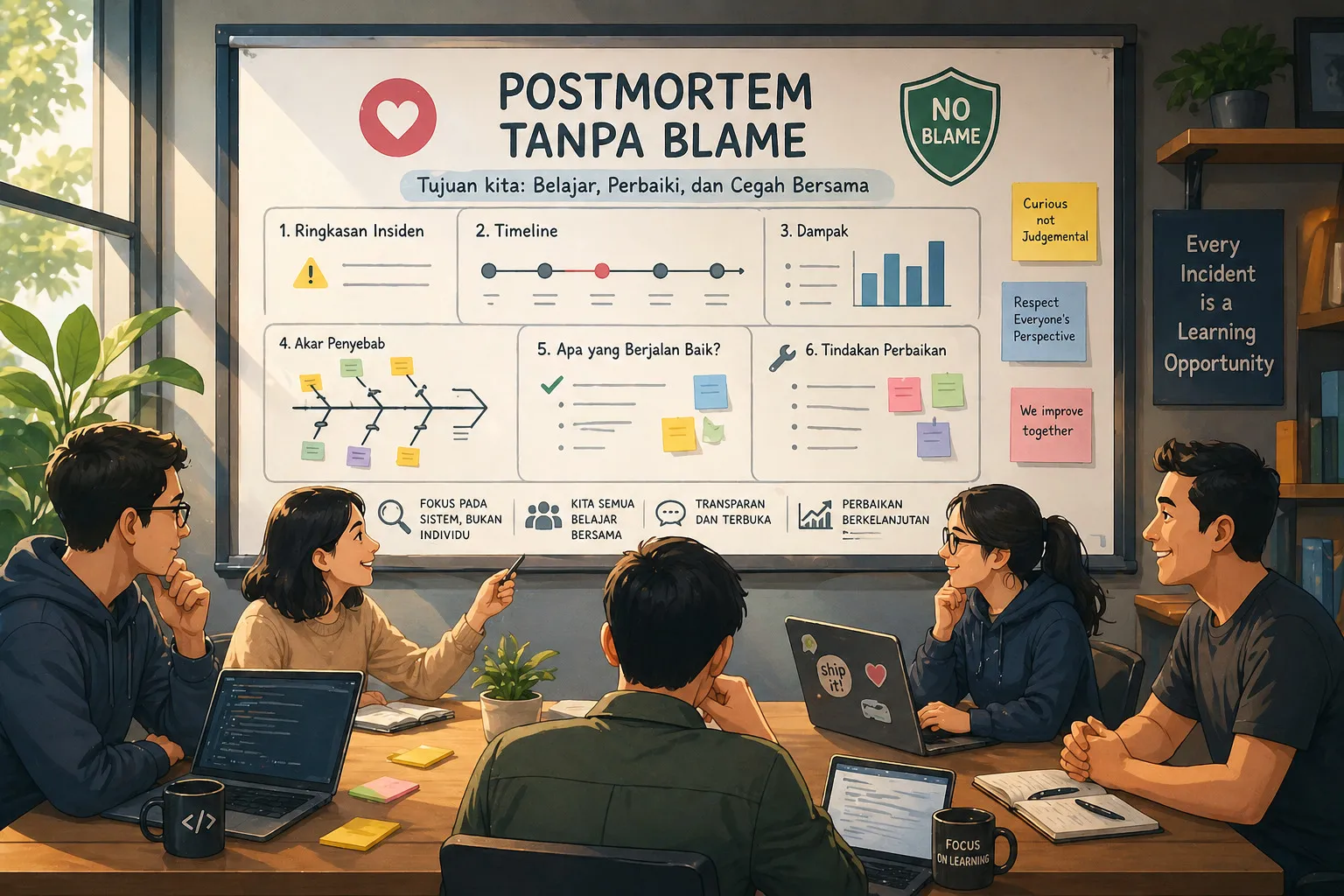
Blameless Postmortems: Incident Learning for Engineering Teams
Run blameless postmortems that turn incidents into system learning, stronger action items, better follow-up, and healthier team culture.
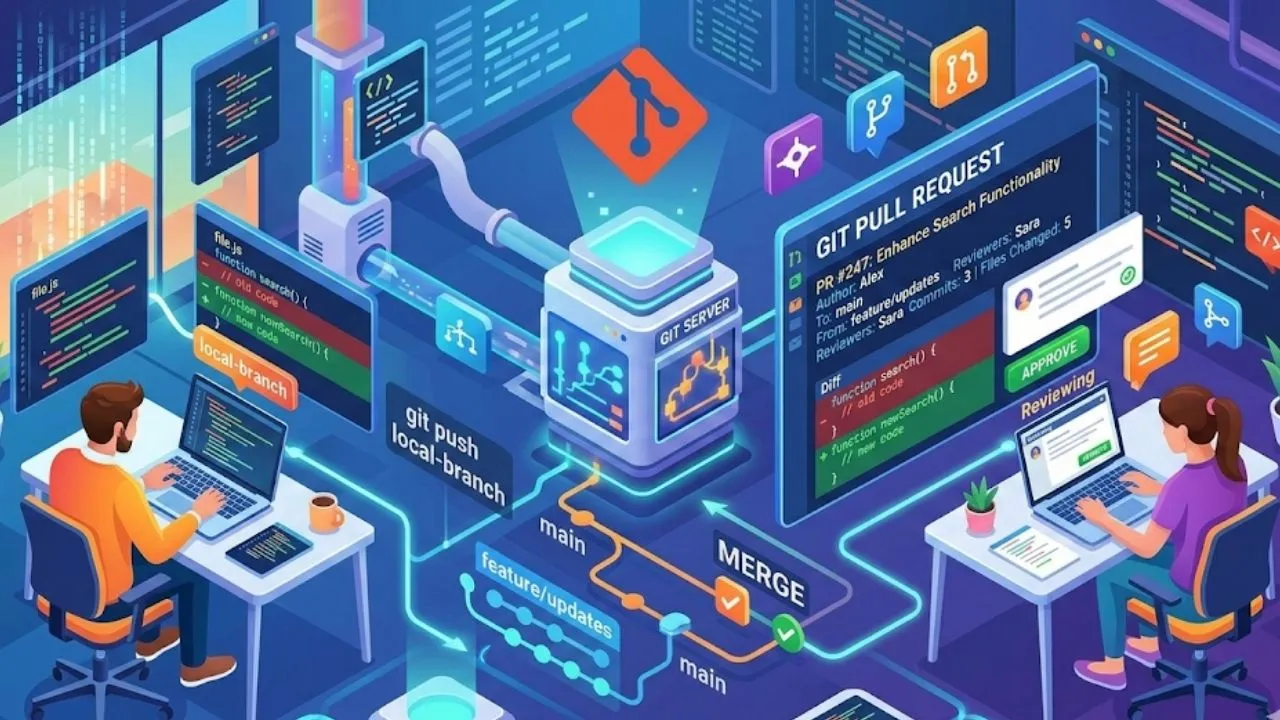
Git Pull Request Guide: Cleaner PRs and Faster Reviews
Learn Git pull request basics, cleaner PR structure, review etiquette, merge safety, and team workflows for faster code review.
Developer Documentation: Write Docs Teams Actually Read
Write developer documentation teams actually read with clearer structure, ownership, examples, update rhythm, and searchable docs.

AI Code Review Playbook: Faster Reviews Without Lower Quality
Use AI in code review to summarize changes, spot risky patterns, prepare comments, and keep human quality standards intact.