Django vs Flask vs FastAPI: When to Use Each
Table of Contents
- Introduction
- The Short Answer
- Django: Full-Stack and Batteries-Included
- Flask: Minimal, Flexible, and Easy to Shape
- FastAPI: Typed, API-First, and Async-Friendly
- Feature Comparison
- When to Choose Django
- When to Choose Flask
- When to Choose FastAPI
- Common Mistakes When Choosing
- Decision Checklist
- FAQ
- Conclusion
Introduction
Python gives backend developers several excellent web frameworks, but three names come up again and again: Django, Flask, and FastAPI.
They are all production-ready, widely used, and capable of building serious applications. The tricky part is that they are designed with different assumptions. Django wants to give you a complete web application stack. Flask gives you a small core and lets you assemble the rest. FastAPI focuses on modern API development with type hints, validation, and async support.
So the best question is not “which framework is best?” The better question is: which framework fits the product, team, and architecture you are building right now?
The Short Answer
Choose Django when you need a complete web application with authentication, admin screens, database models, forms, templates, security defaults, and a clear project structure.
Choose Flask when you want a lightweight framework for a small app, prototype, webhook service, internal tool, or custom architecture where you prefer choosing each dependency yourself.
Choose FastAPI when you are building APIs, microservices, ML services, async-heavy backends, or systems where request validation and OpenAPI documentation should be automatic from day one.
If your project is a traditional product backend with users, roles, dashboard screens, CRUD, and admin operations, Django is usually the safest default. If your project is mostly an API consumed by frontend apps or other services, FastAPI often feels more natural.
Django: Full-Stack and Batteries-Included
Django is a high-level Python web framework built around the idea of shipping complete web applications quickly. It includes many features that teams often need in real products:
- ORM for database models
- migrations
- admin interface
- authentication
- permissions
- forms
- templating
- security protections
- URL routing
- testing utilities
This “batteries-included” style is Django’s biggest strength. Instead of deciding which admin package, migration tool, authentication library, or form system to use, you start with official building blocks that already work together.
That makes Django especially strong for apps with back-office workflows, content management, user accounts, dashboards, and relational data.
The trade-off is that Django has a stronger opinion about project structure. If your team wants maximum freedom to design everything from scratch, Django may feel heavy. But for many production teams, that structure is a feature, not a limitation.
Flask: Minimal, Flexible, and Easy to Shape
Flask is a micro-framework. It gives you routing, request handling, templating, and a simple development flow, but it does not try to be a complete application platform out of the box.
That makes Flask easy to start:
pip install flaskfrom flask import Flask
app = Flask(__name__)
@app.get("/")
def home():
return {"message": "Hello from Flask"}Flask works well when your application is small, unusual, or intentionally custom. You can add SQLAlchemy, Flask-Login, Marshmallow, Celery, or any other library as needed.
The upside is flexibility. The downside is decision fatigue. As the app grows, your team must make more architectural choices and enforce consistency manually.
Flask is still a strong choice for prototypes, lightweight services, education, dashboards, webhooks, and apps where a small framework is enough.
FastAPI: Typed, API-First, and Async-Friendly
FastAPI is built for modern Python APIs. It uses type hints and Pydantic models to validate request data, serialize responses, and generate OpenAPI documentation automatically.
pip install fastapi uvicornfrom fastapi import FastAPI
from pydantic import BaseModel
app = FastAPI()
class UserCreate(BaseModel):
name: str
email: str
@app.post("/users")
def create_user(user: UserCreate):
return userThat model-driven style is one of FastAPI’s biggest advantages. You describe the shape of the data, and the framework handles validation and documentation for you.
FastAPI also supports async development naturally because it is built on ASGI. That makes it a good fit for services that spend a lot of time waiting on external APIs, queues, streaming responses, or network I/O.
The trade-off is that FastAPI is not a full-stack web framework like Django. You still need to choose your database layer, migrations, admin interface, authentication approach, background job system, and project conventions.
Feature Comparison
| Area | Django | Flask | FastAPI |
|---|---|---|---|
| Framework type | Full-stack framework | Micro-framework | API-first framework |
| Best for | Web apps, admin, CRUD, dashboards | Small apps, prototypes, custom services | APIs, microservices, async services |
| Built-in admin | Yes | No | No |
| ORM included | Yes | No | No |
| Request validation | Basic forms and serializers via ecosystem | Add libraries manually | Built in with Pydantic |
| API docs | Needs Django REST Framework or tools | Needs extensions | Automatic OpenAPI docs |
| Async support | Available, but mixed with sync ecosystem | Possible, not the main default | First-class ASGI model |
| Project structure | Opinionated | Flexible | Flexible |
| Learning curve | Medium | Low | Low to medium |
| Best team fit | Teams that want conventions | Teams that want control | Teams building typed APIs |
When to Choose Django
Choose Django when the application needs more than API endpoints.
Django is a strong fit for:
- SaaS dashboards
- internal admin tools
- marketplace backends
- content platforms
- learning management systems
- CRM-style apps
- CRUD-heavy business apps
- apps with many relational models
- teams that want clear conventions
Django shines when your product needs authentication, permissions, admin operations, and database-backed workflows quickly. Its admin interface alone can save weeks of work for internal teams.
It is also a good choice when the project will be maintained for years by different developers. Django’s conventions make it easier for new team members to understand the structure.
Avoid Django when the service is intentionally tiny, purely event-driven, or mostly a thin API layer where the admin, templates, forms, and built-in app structure would not be used.
When to Choose Flask
Choose Flask when you want a simple framework that stays out of your way.
Flask is a good fit for:
- prototypes
- small internal apps
- webhook receivers
- lightweight dashboards
- teaching web development
- custom architecture experiments
- simple backend-for-frontend services
Flask is pleasant when the project is small enough that a full-stack framework would feel excessive. It is also useful when you want to choose every piece yourself.
The main warning: Flask apps can become messy when they grow without clear structure. If the app is expected to become large, define conventions early for blueprints, configuration, database access, validation, tests, and background jobs.
When to Choose FastAPI
Choose FastAPI when the main product surface is an API.
FastAPI is a strong fit for:
- REST APIs
- microservices
- backend services for frontend apps
- ML model serving
- data validation-heavy APIs
- async I/O services
- internal platform APIs
- services that need OpenAPI documentation
FastAPI feels especially good when your team already uses type hints and wants strong request/response contracts. The automatic docs are also useful when frontend, mobile, QA, or partner teams consume your API.
FastAPI is not only about speed. The bigger day-to-day value is usually developer experience: validation, schemas, editor autocomplete, docs, and clearer contracts.
Avoid FastAPI when you really need a complete web application platform with admin screens, user management, forms, and content workflows. You can build those pieces, but Django gives you more of them upfront.
Common Mistakes When Choosing
Choosing FastAPI only because it is fast
Performance matters, but most business apps are limited by database queries, external APIs, architecture, and deployment choices before the framework itself becomes the bottleneck.
Choose FastAPI for API ergonomics, validation, docs, and async support. Treat raw speed as a bonus, not the only reason.
Choosing Flask for a product that needs many built-in features
Flask can power production systems, but a CRUD-heavy business app may eventually require many packages and custom decisions. If you already know you need admin screens, auth, permissions, and relational workflows, Django may get you there faster.
Choosing Django for a tiny service
Django is productive, but it can be more structure than needed for a small webhook, a simple proxy, or a one-purpose microservice. In those cases, Flask or FastAPI may be easier to operate.
Ignoring the team’s existing skill
The best framework on paper is not always the best framework for your team. If your team already knows Django deeply, choosing Django may be faster and safer than adopting FastAPI for a project that does not need FastAPI’s strengths.
Decision Checklist
Use this checklist before deciding:
- Need built-in admin, auth, ORM, migrations, and permissions? Choose Django.
- Need a tiny app or custom structure? Choose Flask.
- Need typed APIs, automatic docs, and validation? Choose FastAPI.
- Need async I/O as a core design requirement? Prefer FastAPI.
- Need a dashboard plus admin workflows? Prefer Django.
- Need a quick prototype with minimal setup? Flask is often enough.
- Need a long-lived business app with a clear structure? Django is a strong default.
- Need a service consumed by frontend, mobile, or partner teams? FastAPI is often a strong fit.
FAQ
Is Django better than Flask and FastAPI?
Not always. Django is better when you need a complete web application framework. Flask is better when you want a small flexible core. FastAPI is better when you are building typed APIs with validation and documentation.
Can Django build APIs?
Yes. Django can build APIs directly, and many teams use Django REST Framework for richer API development. If your app also needs admin, auth, and database workflows, Django plus DRF can be a strong combination.
Can FastAPI replace Django?
For API-first projects, sometimes yes. For full-stack apps with admin screens, templates, forms, and content workflows, FastAPI is not a direct replacement for Django.
Is Flask still worth learning?
Yes. Flask is still useful because it teaches the fundamentals clearly and remains practical for small apps, prototypes, and custom services.
Which framework should beginners learn first?
If you want to understand web basics with minimal overhead, start with Flask. If you want to build complete products, start with Django. If you want to build modern APIs, start with FastAPI.
Conclusion
Django, Flask, and FastAPI are not enemies. They solve different problems.
Use Django when you want a complete, convention-driven framework for real web applications. Use Flask when you want a small flexible foundation. Use FastAPI when your project is API-first, typed, and likely to benefit from automatic validation and documentation.
The best choice is the one that reduces decisions your team does not need to make, while giving you enough flexibility for the decisions that actually matter.
Related Articles
Keep reading within the same topic.
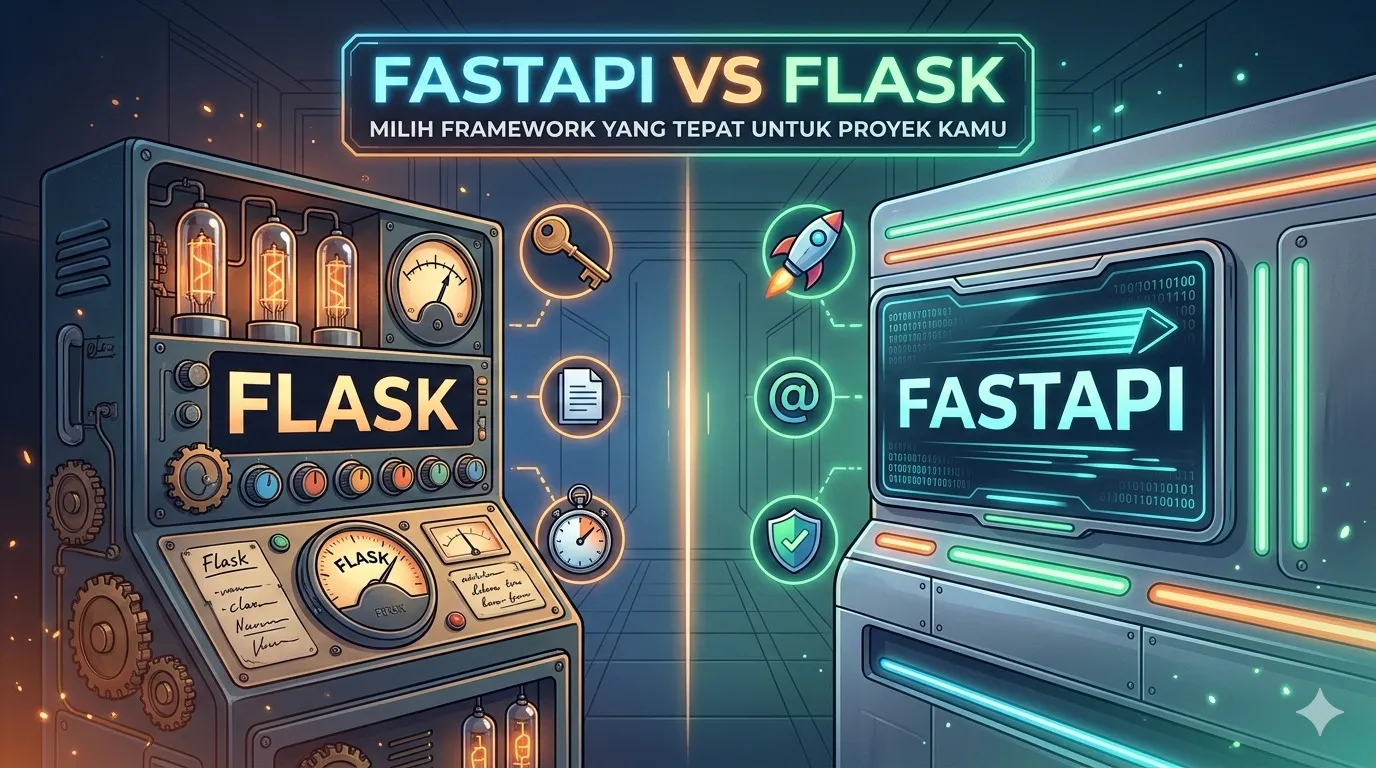
FastAPI vs Flask: Performance, Async, and Validation
Compare FastAPI and Flask by performance, async support, validation, developer experience, ecosystem, and real-world Python API use cases.

Flask Logging Guide: Levels, Formats, and Sentry
Set up Flask logging with useful levels, structured formats, handlers, Rich output, and Sentry integration for easier debugging.
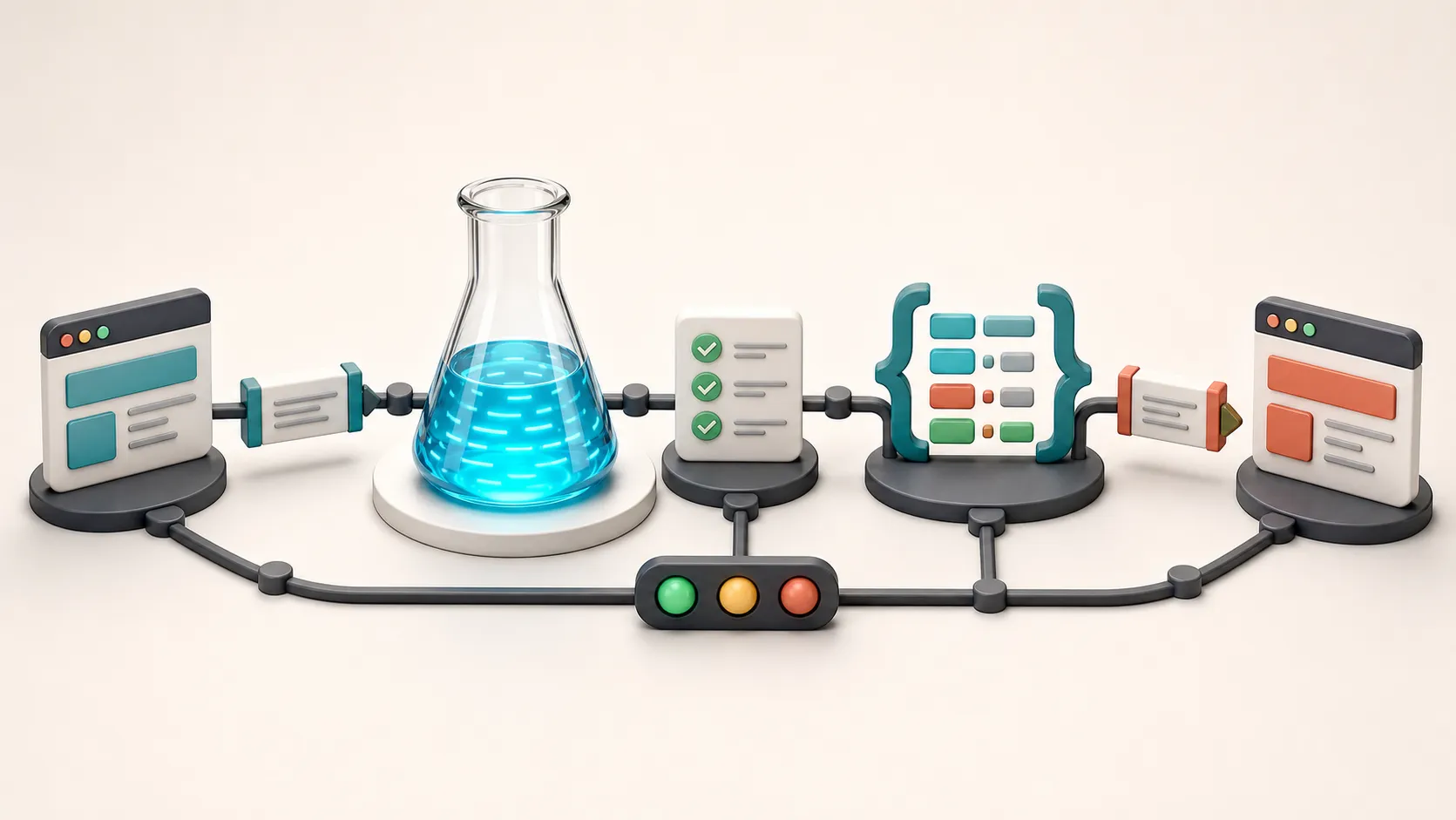
Flask JSON APIs: Request Bodies, jsonify, and Status Codes
Build a Flask JSON API that reads request bodies, validates payloads, stores notes, and returns consistent responses and status codes.
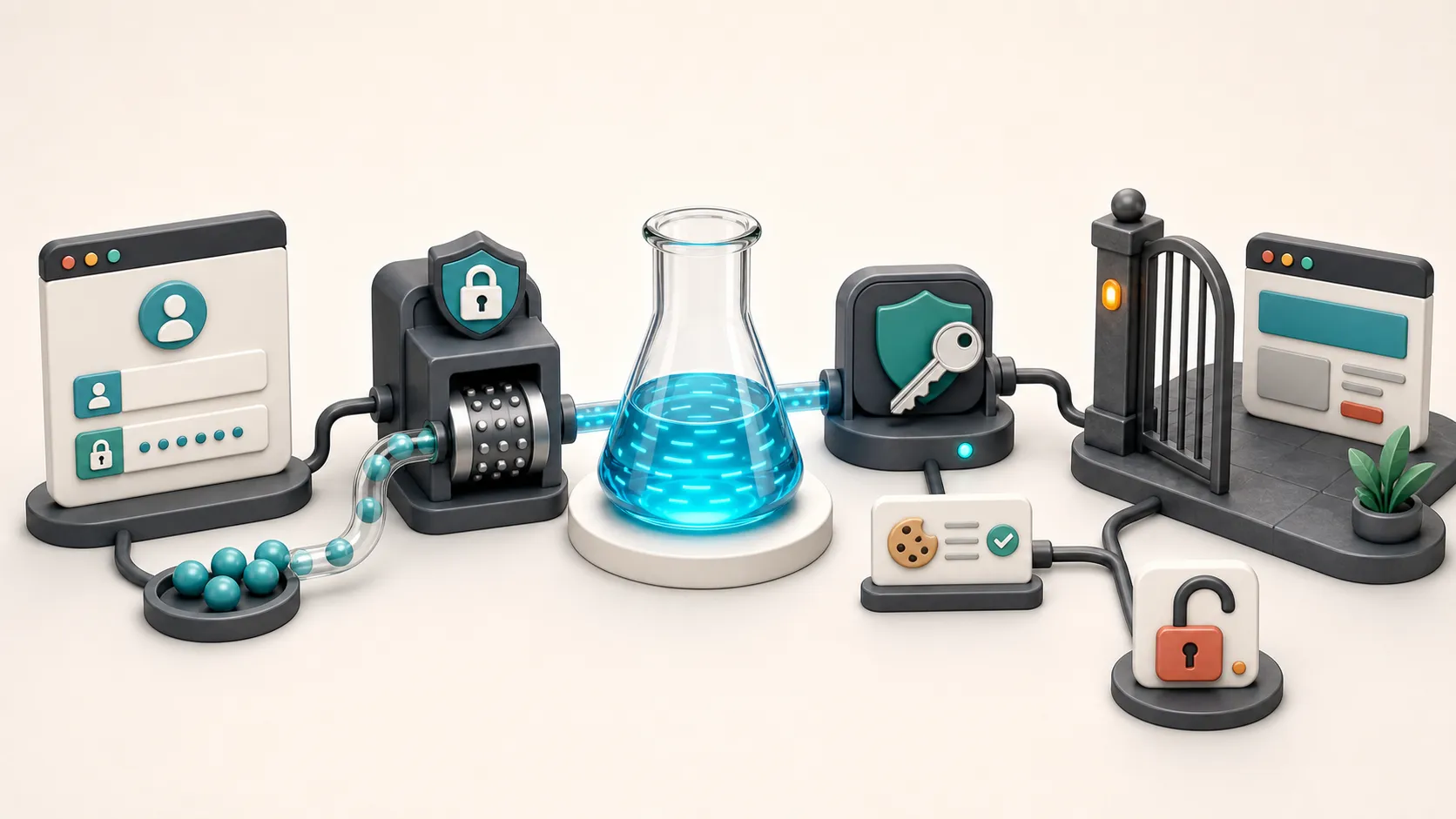
Flask Authentication: Login, Sessions, and Logout
Build Flask authentication with password hashes, login sessions, a current user, protected routes, and logout without storing plaintext passwords.